
Learning through experience
Ask. Experiment.
Understand.
Our laboratories give students opportunities to move from ideas to observation, and from classroom explanations to practical understanding.
Mathematics Lab
“Learning with Joy” is the central purpose of the mathematics lab. Games and models help make difficult or abstract concepts easier to understand through learning by doing. Vedic Maths supports quicker, more accurate calculation.
Maths Garden
The maths garden offers a practical way to explore basic geometrical shapes and concepts in an engaging setting.
Computer Lab
Computer education is offered from Classes I to XII. Two equipped laboratories provide computers, software, and internet connectivity for different age groups.
Learning includes basic computer concepts, programming, word processing, spreadsheets, databases, and multimedia under the guidance of a computer teacher.

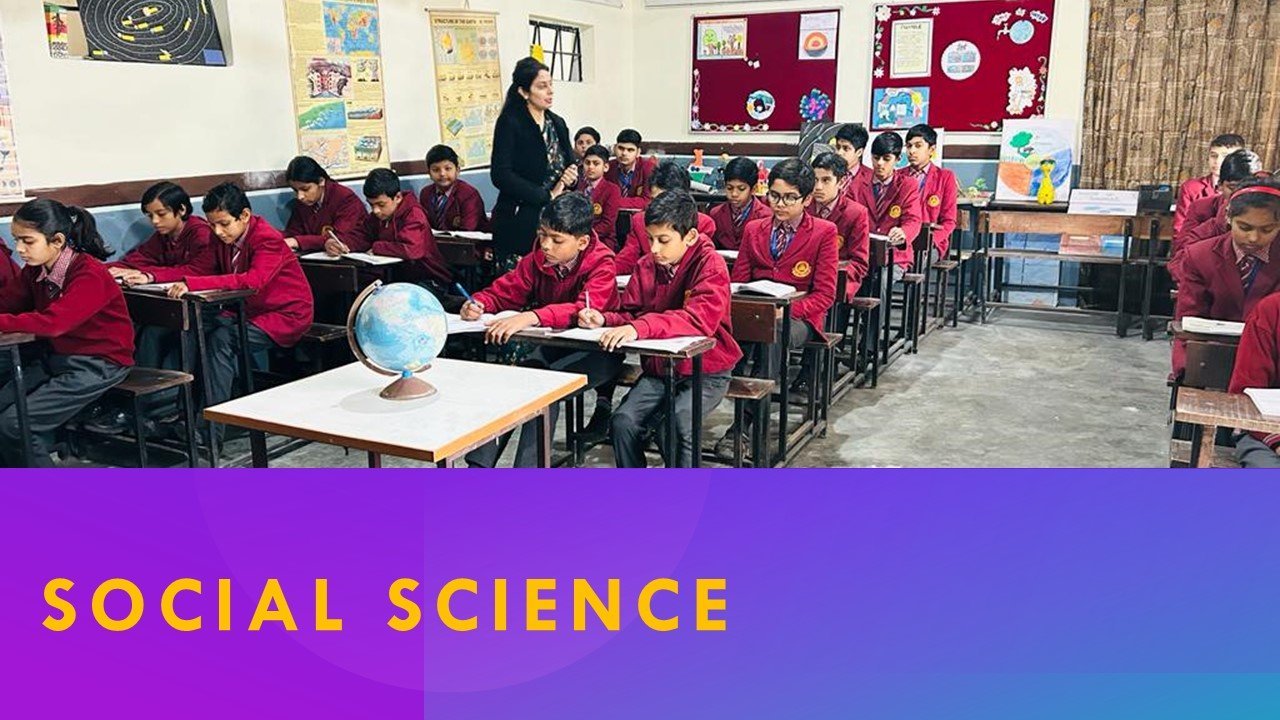
Social Science Lab
The social science lab supports activity-based learning. Models, maps, and visual learning materials help students connect geographical and social concepts with the world around them.
Physics Lab
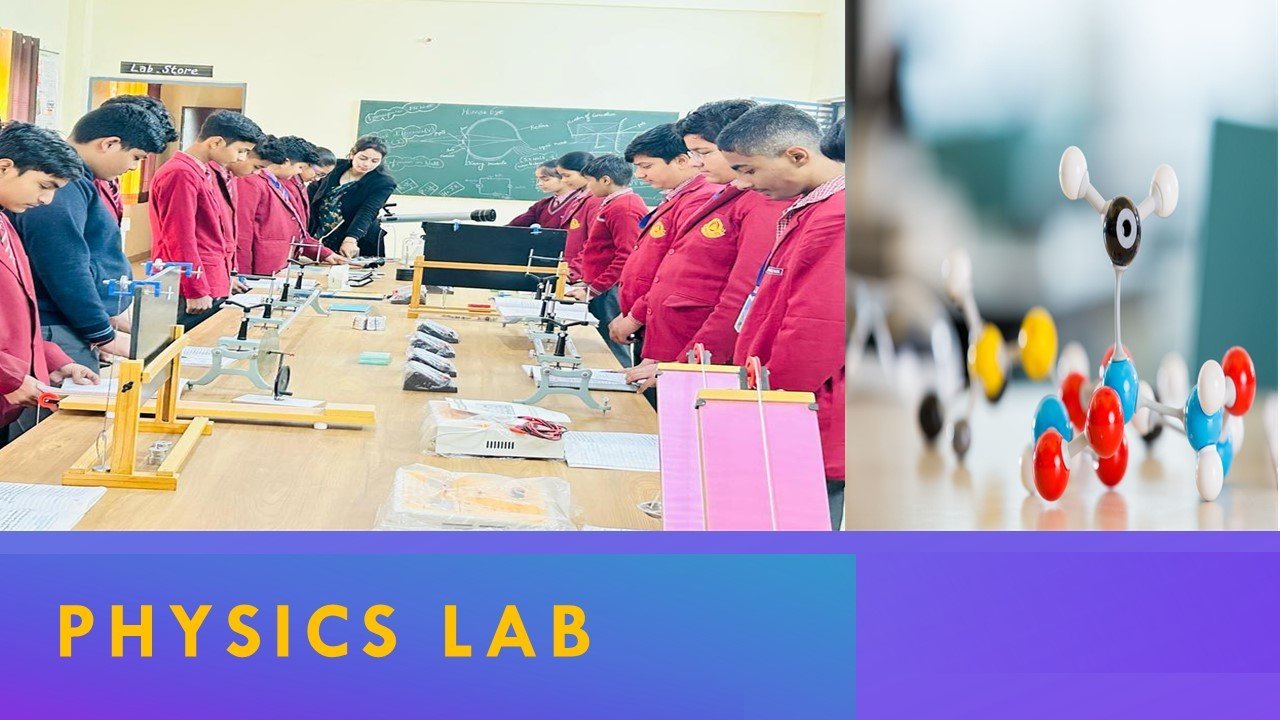
Physics explores everything from small particles to the wider universe and provides a foundation for understanding other sciences and engineering.
The lab includes lenses, magnets, pendulums, inclined planes, measuring instruments, voltammeters, electroscopes, potentiometers, spectroscopes, electromagnets, and glassware for practical experiments.
Chemistry Lab
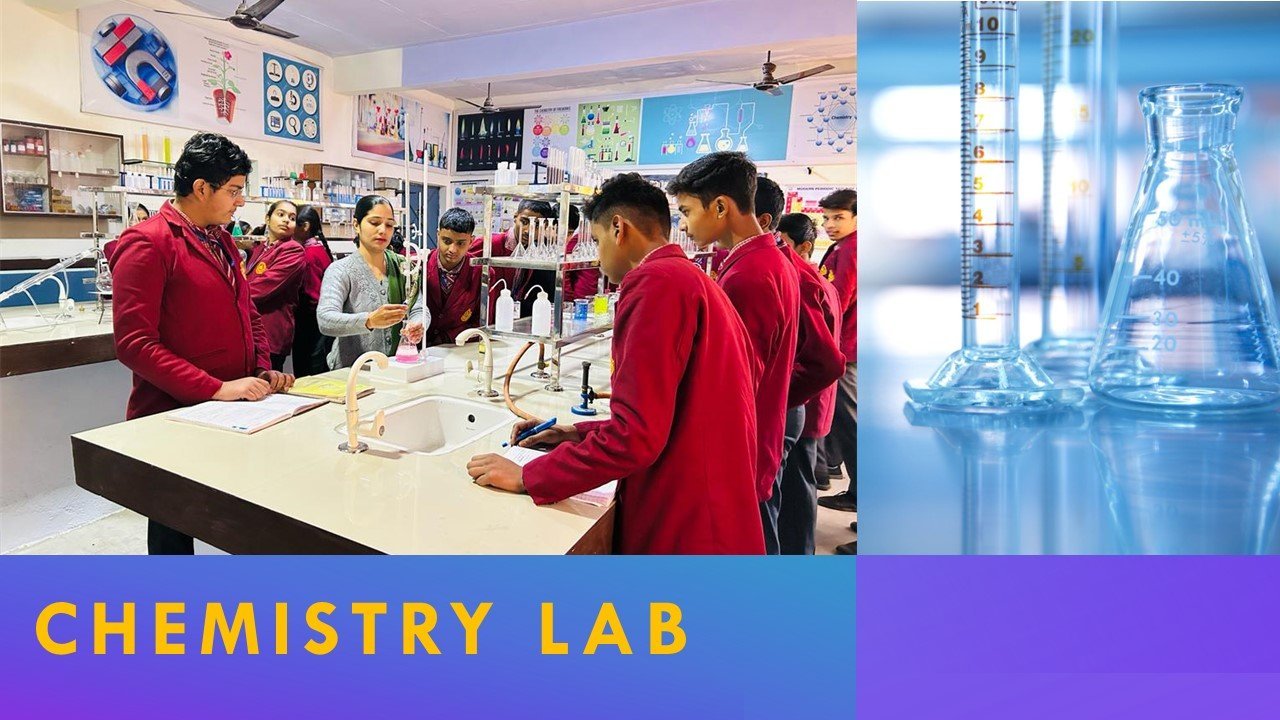
Chemistry practicals help students organise, carry out, and record experiments. The laboratory supports general and introductory chemistry through direct observation and practical work.
Equipment includes glass beakers, analytical and digital balances, Kipp’s apparatus, a distillation chamber, micro kits, and chemicals used for laboratory activities.
Biology Lab
Biology is the study of life and living organisms, including their structure, function, growth, origin, and evolution.
The biology lab has compound and dissecting microscopes, specimens, a human skull model, test tubes, three-dimensional models, and charts that support the study of living systems.

Discover what comes next.
Talk to our school team ↗